
Building a Learning Culture: Online Training Platforms for Bahamian Businesses
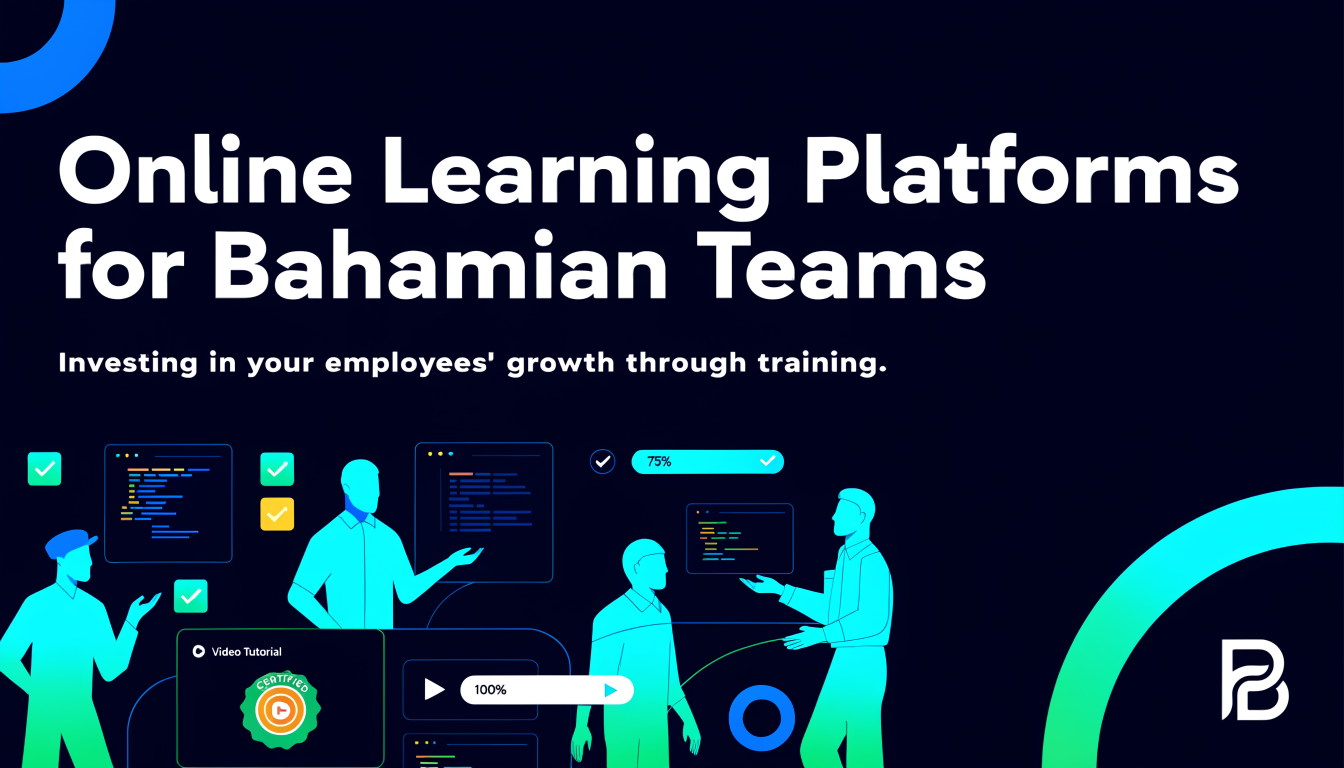
The Training Gap in Bahamian Businesses
Most Bahamian small and medium-sized businesses approach training the same way: hire someone, show them around for a week, and hope the existing team models the right behaviors. When a skill gap becomes obvious — customer complaints, operational errors, missed opportunities — the response is usually a one-day workshop or a one-on-one coaching session.
This approach is expensive in staff time, inconsistent in what gets taught, and immediately forgotten in the absence of reinforcement.
Online learning platforms change the economics and the outcomes of employee training.
Why Online Learning Works for Bahamian SMEs
Cost efficiency: A single online course — customer service, digital marketing, QuickBooks basics — purchased once can train your entire team. The marginal cost of training the 10th employee is zero.
Consistency: Every employee learns the same material, presented the same way. The quality of onboarding doesn't depend on which senior staff member is available to train this week.
Flexibility: Employees complete training during slow periods, not during peak hours. A retail associate can complete a customer service module at 7am before the store opens, not during a busy Saturday afternoon.
Progress tracking: You can see which employees completed which modules, their quiz scores, and where they're struggling — without having to sit in on every training session.
Platforms Worth Knowing
LinkedIn Learning
The largest business learning library available, with thousands of courses across business skills, technology, creative, and leadership. Particularly strong for professional development content. Individual subscriptions are ~$40/month; team pricing is available.
Coursera for Business
University-quality courses from institutions like Yale, Google, and IBM. Strong for technical training (data analysis, digital marketing, project management) and credentials that employees can add to their professional profiles.
TalentLMS / Teachable / Thinkific
These are platforms for creating and hosting your own internal training content — not purchasing existing courses. If your business has proprietary processes, compliance requirements, or product knowledge that needs to be standardized, building your own course library on one of these platforms gives you full control over the content.
Google Workspace Training
Google offers free training resources for businesses using Google Workspace (Gmail, Drive, Docs, Sheets). If your team is underutilizing these tools — and most are — structured training can dramatically improve productivity.
A Practical Implementation Approach
Start with onboarding: Build a short onboarding course (3-5 modules covering company overview, core tools, key processes, customer service standards) on a platform like TalentLMS. Every new hire completes this before their first day on the floor.
Address your top gap: Identify the most expensive skills gap in your business right now — whether that's customer service, sales techniques, or a specific software tool — and source a course that addresses it directly.
Make completion visible: When leadership talks about who completed training and what they're working on, it signals that learning is valued. Recognition for course completion — even a simple mention in a team meeting — reinforces the behavior.
Ready to Build a Learning Culture?
Digitize Bahamas helps Bahamian businesses select and implement training platforms that fit their team size, budget, and skills gap priorities. Contact us to discuss your team development goals.
Tags
Ready to Transform Your Document & Records Management?
Get a free assessment and see how Docu Island can help your business
Get Free AssessmentRelated Articles
AI Tools for Bahamian Businesses: What's Actually Useful Right Now
The AI conversation often sounds like science fiction. This post cuts through the hype and focuses on what AI tools are doing practical, revenue-generating work for Bahamian businesses in 2029.
Jul 10, 2029Hurricane Season Business Continuity: The Digital Preparation Checklist for 2029
Hurricane season runs June through November. For Bahamian businesses, digital preparation isn't optional — it's the difference between recovery and closure. Here's the 2029 checklist that actually matters.
Jul 3, 2029Retail Automation for Bahamian Shops: Inventory, POS, and Beyond
Retail automation for Bahamian shops isn't about robots — it's about inventory tracking, POS integration, and reorder triggers that save time and prevent stockouts.
May 29, 2029