
How a Nassau Law Firm Digitized Its Client Files Without Missing a Billable Hour
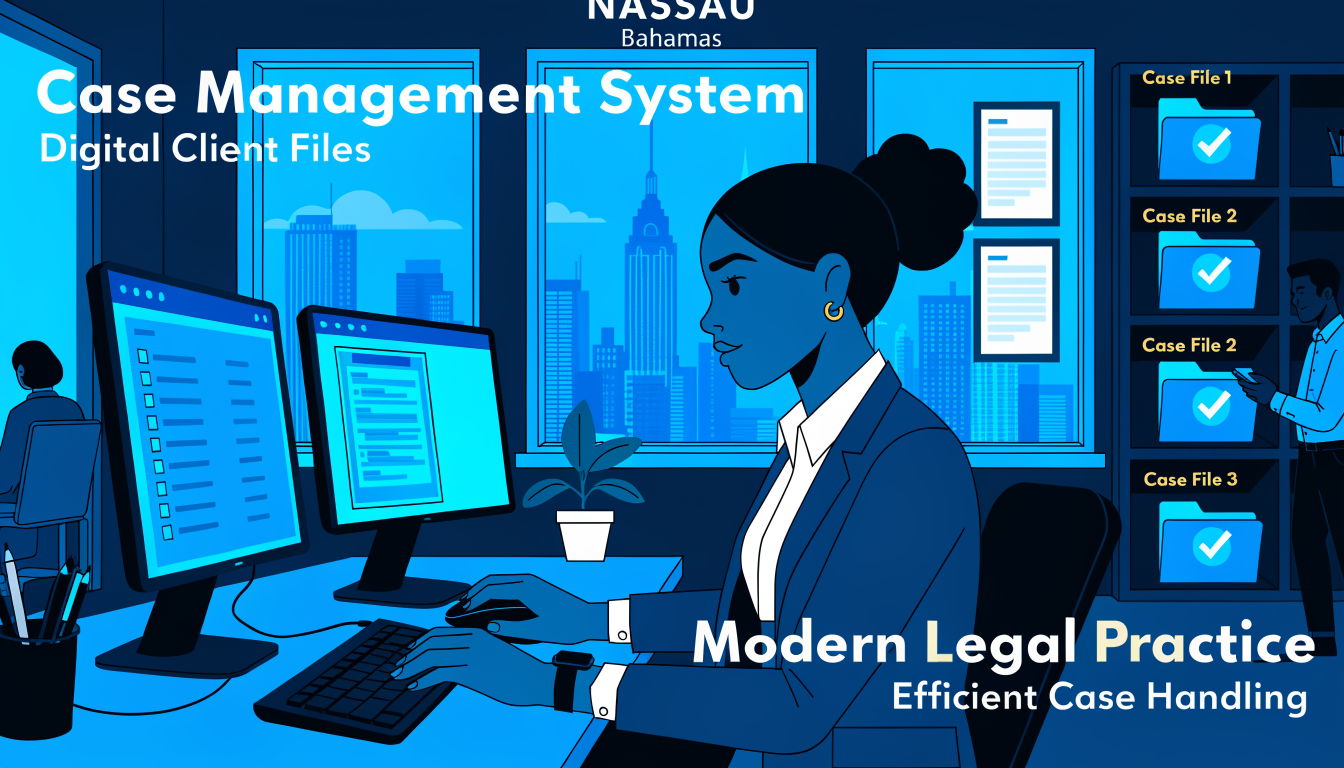
When a law firm partner asks what digitising their client files will cost, the first number that usually matters most is not the scanning invoice. It is the question underneath the question: How much will this disrupt the firm while it's happening?
Legal practices run on continuity. A client matter cannot pause because the file is at a scanning facility. A court deadline does not care that a document is mid-migration. Billing cannot stop for weeks while records are reorganised. The fear that a digitisation project will disrupt operations is the single largest reason law firms delay it — often for years beyond when it would have been beneficial.
This case study describes how a mid-sized Nassau law firm digitised 22 years of client files without missing a single billable hour. The details have been lightly anonymised, but the process, timeline, and outcomes are real.
The Firm's Starting Point
The firm — a general practice with seven attorneys and twelve support staff — had been operating from the same Nassau premises for over two decades. Client files were maintained in physical folders stored in a combination of filing cabinets, open shelving units, and a locked archive room. The archive room alone held an estimated 8,000 closed-matter folders covering the firm's earliest years of practice.
Active matters were tracked in a combination of a practice management software system and a physical "active files" area near the secretary stations. Retrieval of archived documents required a staff member to physically locate the folder — a process that could take anywhere from five minutes to over an hour depending on how old the matter was and how consistently it had been filed.
The firm's specific pain points:
- Retrieval time: Associates billing at $300+ per hour spent significant time each week locating physical files
- Storage space: The archive room was full; rented offsite storage was adding $800/month to overheads
- Hurricane vulnerability: A flood in the car park during a prior hurricane season had already damaged a small number of archived files
- Succession planning: Two founding partners were approaching retirement; a well-organised digital archive would be essential for knowledge transfer
Why They Had Waited
The firm had first discussed digitisation three years before actually starting it. The reasons for delay were consistent across multiple conversations:
- Concern about files being unavailable while at a scanning facility
- Uncertainty about which files were "active enough" to keep on-premises
- Worry about client confidentiality during the scanning process
- The sheer volume of the project feeling overwhelming
- Two failed attempts at starting the process with different vendors who had not delivered on their commitments
The breakthrough came when the firm engaged a local technology partner who proposed a phased approach specifically designed around the firm's operational constraints — one that would begin with archived files only, never touching active matters until the team was confident in the process.
The Approach: Archive First, Active Later
The implementation was structured in three phases, each with a clear scope and defined success criteria before moving to the next.
Phase 1: Closed Archive (Months 1–3)
The archive room — approximately 8,000 closed-matter folders — was the starting point. These files had not been accessed in years. Scanning them created zero operational risk because no one needed them for current work.
The process:
- The scanning team came on-site during the firm's off-hours (after 6pm and on Saturdays) to avoid disrupting the office
- Folders were batched and scanned on-site — documents never left the building
- Each folder was scanned, OCR-processed for full-text search, and returned to its physical location before the office opened
- Original files were retained in the archive room until the partner confirmed the digital versions were correct
- Digital files were uploaded to the firm's new document management system, organised by client name and matter number
After three months, 8,000 folders were fully digitised and searchable. The archive room was cleared. The offsite storage rental was cancelled. Retrieval of any archived document dropped from an average of 45 minutes to under 60 seconds.
Phase 2: Active Filing Cabinet Integration (Months 3–4)
With the archive complete and the team confident in the process, attention turned to active filing cabinets. This phase was more delicate because files were being actively used during the day.
The solution: a "scan-as-you-go" protocol was established alongside the systematic digitisation of filing cabinet contents. Each morning, a designated support staff member batched the previous day's new physical documents for scanning before they were placed in physical folders. New documents entered the digital system within 24 hours of receipt.
Filing cabinet contents were scanned folder by folder over four weeks, following the same on-site, after-hours approach used in Phase 1. By the end of month four, all active physical files had a digital twin in the DMS.
Phase 3: Scan-Forward Protocol (Month 5 onward)
The final phase was establishing the ongoing protocol: from this point, the firm operates digitally first. New documents are scanned on receipt. Outgoing documents are generated digitally. Physical files are retained for specific matter types that require originals (signed deeds, original court orders) but the digital record is the primary working document.
Physical originals are now stored in a small, well-organised filing system — a fraction of the previous footprint — while digital records serve as the working archive.
The Technology Stack
The firm's implementation used:
- A cloud-based legal document management system with client-matter organisation structure
- High-speed duplex scanners capable of 80 pages per minute, operated on-site
- OCR processing to make all scanned documents full-text searchable
- Role-based access control — clerks can access only assigned matters; partners can access all files
- Automatic backup to redundant cloud servers with Bahamian data residency
- Integration with the firm's existing practice management software
The Outcomes at 12 Months
One year after the project began, the firm assessed the results:
- Retrieval time: Reduced from an average of 45 minutes (archived files) and 8 minutes (active files) to under 60 seconds for any document in the system
- Storage cost: Offsite storage eliminated, archive room repurposed as a client meeting room
- Associate efficiency: Estimated 3–4 hours per week per attorney recovered from file-search activities — redirected to billable work
- Business continuity: All records now backed up in real time; hurricane season no longer a records risk
- Client service: Attorneys can now retrieve any document during client calls in real time, rather than calling back after "checking the file"
- Disruption during migration: Zero billable hour impact reported. No active matter file was unavailable at any point during the project.
What the Firm Would Do Differently
Speaking frankly, the managing partner noted one thing she wished they had done earlier: started the archive digitisation three years sooner, when the project was first discussed. "Every year we waited, the archive grew. Every year we waited, our attorneys spent time they didn't need to spend looking for files. The concern about disruption turned out to be largely unfounded — the project was designed around our operations, not the other way around."
The Key Lesson
Digitisation projects fail when they are imposed on a business without regard for how the business actually works. They succeed when the process is designed around operational reality — in this case, scanning after hours, never removing original files from the premises, phasing the work so confidence builds before scope expands, and establishing clear success criteria for each phase before moving on.
For Bahamian law firms and professional services practices, the question is not whether to digitise — it is when and how. The sooner the project starts and the more carefully it is designed, the sooner the operational benefits compound.
Planning a Document Digitisation Project for Your Practice?
Book a Free Digital Growth Audit with the Novio Group team. We assess your current records environment, design a phased approach that fits your operational constraints, and give you a clear cost and timeline estimate — at no charge.
Book Your Free Digital Growth Audit
Tags
Ready to Transform Your Document & Records Management?
Get a free assessment and see how Docu Island can help your business
Get Free Assessment