
Back to Blog•May 13, 2026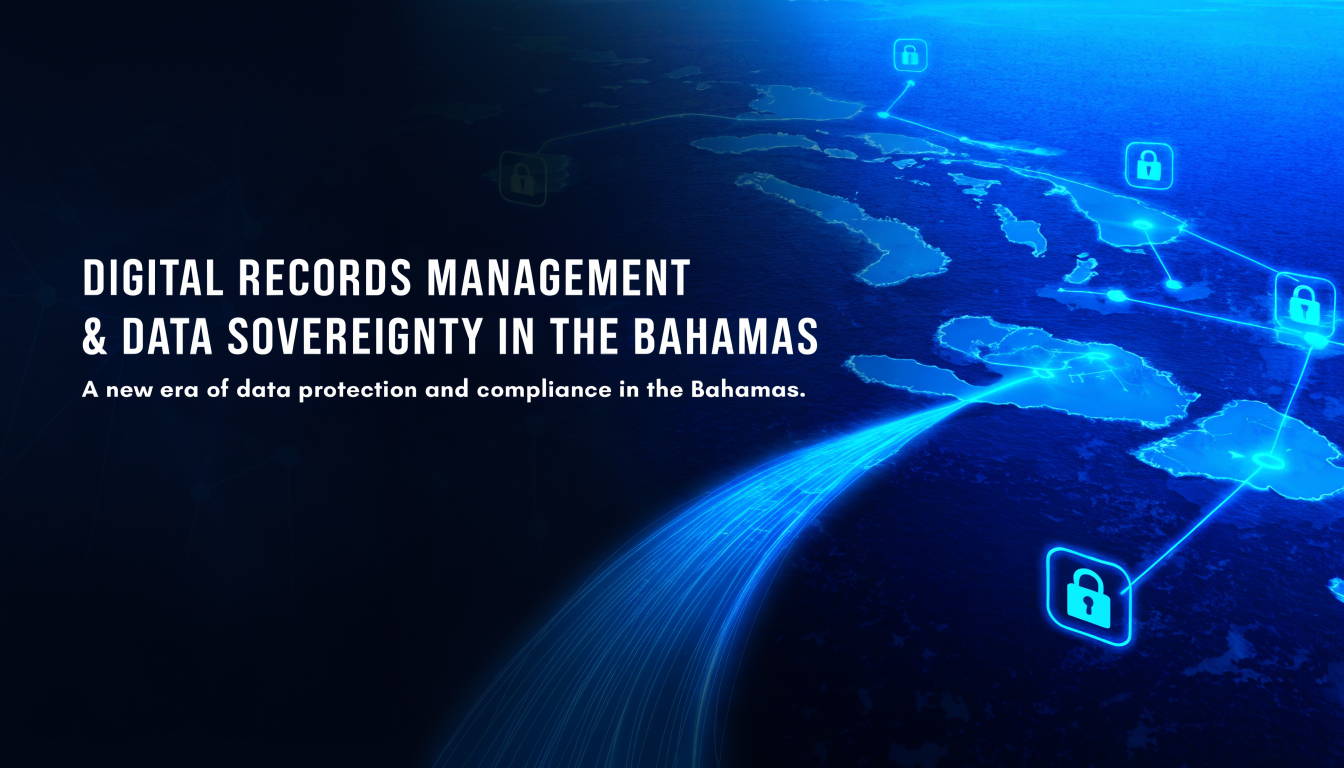
Records Management7 min read
Digital Records Management in the Caribbean: Why Your Data Should Stay in The Bahamas
Docu Island Team
Document & Records Management Specialists
When a Bahamian law firm signs up for a popular cloud storage platform, they often don't read the terms carefully enough to notice: their client files are now sitting on servers in Virginia or Oregon. Their confidential legal documents — protected by strict professional obligations under Bahamian law — are being processed by foreign infrastructure, subject to foreign subpoenas, and accessible to foreign government requests.
This is the data sovereignty problem, and it affects every Caribbean business that uses a foreign cloud provider for document storage.
## What Is Data Sovereignty?
Data sovereignty means that data is subject to the laws of the country where it physically resides — not just the country of the company that owns it.
If your documents are stored on AWS servers in the United States, they are governed by U.S. law. That includes the CLOUD Act, which allows U.S. authorities to compel American companies to produce data stored overseas without notifying the data's owner. It includes U.S. court orders and civil discovery requests. It potentially includes surveillance programs you'll never hear about.
For a Bahamian business, this creates a gap between what you think your data protection means and what it actually means.
## Why This Matters More in The Bahamas
Several factors make data sovereignty especially important for Bahamian organizations:
**Legal and professional obligations**
Law firms, accountants, healthcare providers, and financial services companies have strict confidentiality obligations under Bahamian law. Sending client data overseas — even to a reputable cloud vendor — may constitute a breach of those obligations, particularly if the data is later accessed without client consent.
**Insurance and liability requirements**
Insurance companies holding policyholder data have obligations regarding where and how that data is stored. The Bahamas Insurance Act and associated regulations are increasingly explicit about data handling requirements.
**Government procurement**
Government agencies and contractors handling public records are often subject to requirements that sensitive records remain within Bahamian jurisdiction. Using foreign cloud storage for government records may disqualify vendors from future contracts.
**Hurricane business continuity**
This is the one that often surprises people: foreign cloud providers, while technically resilient, are not optimized for Caribbean business continuity. Their disaster recovery processes, support hours, and infrastructure are built for their primary markets. A Bahamian-based provider has infrastructure designed to keep your data accessible before, during, and after a hurricane.
## The Caribbean Cloud Landscape
Most Caribbean businesses are using one of three approaches to digital records management:
**1. Foreign hyperscalers** (Google Drive, Dropbox, Microsoft OneDrive, AWS S3)
Convenient and affordable, but your data lives offshore. Fine for general business files; problematic for sensitive client records, regulated industries, or anything that should stay in Bahamian jurisdiction.
**2. On-premises servers**
You own the hardware, the data stays local, but you bear all the infrastructure costs and vulnerability. A flooded server room means lost records.
**3. Bahamian cloud providers**
Data stays in-jurisdiction, infrastructure is local, support is accessible. This is the sweet spot for businesses with compliance obligations or sensitivity requirements.
## What Good Digital Records Management Looks Like
A modern document management system (DMS) isn't just a hard drive in the cloud. It should include:
- **Structured storage** with consistent naming, tagging, and category systems
- **Full-text search** so any document is findable in seconds
- **Access controls** limiting who can view, edit, or download specific document types
- **Audit trails** showing who accessed what and when — critical for compliance and legal disputes
- **Version control** preserving the history of document changes
- **Retention policies** automatically flagging records due for review or destruction
- **Disaster recovery** with off-site backups that survive local infrastructure failures
All of this should be hosted on Bahamian infrastructure, managed by a Bahamian team, and governed by Bahamian law.
## The Cost of Getting This Wrong
Businesses that wait until something goes wrong to think about records management typically face one of these scenarios:
- **Hurricane document loss**: Physical records destroyed, no digital backup, no way to recover client history or prove past transactions
- **Compliance failure**: Regulatory audit finds records stored in a foreign jurisdiction, triggering fines or licence review
- **Breach and liability**: Foreign vendor suffers a data breach; Bahamian clients' data is exposed; company bears the reputational and legal consequences
- **Operational paralysis**: Staff can't find documents, can't prove compliance, can't serve clients efficiently
## The Docu Island Approach
Docu Island was built specifically for Bahamian businesses. Every document stored in Docu Island stays on Bahamian servers. Our data sovereignty commitment is not a marketing claim — it's built into our infrastructure architecture.
We serve law firms, insurance companies, healthcare providers, government agencies, accounting firms, real estate companies, and schools across The Bahamas. Each industry has specific compliance requirements, and we've built our system to meet them.
If you're currently storing sensitive records on a foreign cloud platform and you're not sure what your actual compliance exposure is, we offer a free records management assessment. We'll review your current setup, identify gaps, and give you an honest picture of your risk — with no obligation to switch.
In The Bahamas, your documents should stay in The Bahamas.
This is the data sovereignty problem, and it affects every Caribbean business that uses a foreign cloud provider for document storage.
## What Is Data Sovereignty?
Data sovereignty means that data is subject to the laws of the country where it physically resides — not just the country of the company that owns it.
If your documents are stored on AWS servers in the United States, they are governed by U.S. law. That includes the CLOUD Act, which allows U.S. authorities to compel American companies to produce data stored overseas without notifying the data's owner. It includes U.S. court orders and civil discovery requests. It potentially includes surveillance programs you'll never hear about.
For a Bahamian business, this creates a gap between what you think your data protection means and what it actually means.
## Why This Matters More in The Bahamas
Several factors make data sovereignty especially important for Bahamian organizations:
**Legal and professional obligations**
Law firms, accountants, healthcare providers, and financial services companies have strict confidentiality obligations under Bahamian law. Sending client data overseas — even to a reputable cloud vendor — may constitute a breach of those obligations, particularly if the data is later accessed without client consent.
**Insurance and liability requirements**
Insurance companies holding policyholder data have obligations regarding where and how that data is stored. The Bahamas Insurance Act and associated regulations are increasingly explicit about data handling requirements.
**Government procurement**
Government agencies and contractors handling public records are often subject to requirements that sensitive records remain within Bahamian jurisdiction. Using foreign cloud storage for government records may disqualify vendors from future contracts.
**Hurricane business continuity**
This is the one that often surprises people: foreign cloud providers, while technically resilient, are not optimized for Caribbean business continuity. Their disaster recovery processes, support hours, and infrastructure are built for their primary markets. A Bahamian-based provider has infrastructure designed to keep your data accessible before, during, and after a hurricane.
## The Caribbean Cloud Landscape
Most Caribbean businesses are using one of three approaches to digital records management:
**1. Foreign hyperscalers** (Google Drive, Dropbox, Microsoft OneDrive, AWS S3)
Convenient and affordable, but your data lives offshore. Fine for general business files; problematic for sensitive client records, regulated industries, or anything that should stay in Bahamian jurisdiction.
**2. On-premises servers**
You own the hardware, the data stays local, but you bear all the infrastructure costs and vulnerability. A flooded server room means lost records.
**3. Bahamian cloud providers**
Data stays in-jurisdiction, infrastructure is local, support is accessible. This is the sweet spot for businesses with compliance obligations or sensitivity requirements.
## What Good Digital Records Management Looks Like
A modern document management system (DMS) isn't just a hard drive in the cloud. It should include:
- **Structured storage** with consistent naming, tagging, and category systems
- **Full-text search** so any document is findable in seconds
- **Access controls** limiting who can view, edit, or download specific document types
- **Audit trails** showing who accessed what and when — critical for compliance and legal disputes
- **Version control** preserving the history of document changes
- **Retention policies** automatically flagging records due for review or destruction
- **Disaster recovery** with off-site backups that survive local infrastructure failures
All of this should be hosted on Bahamian infrastructure, managed by a Bahamian team, and governed by Bahamian law.
## The Cost of Getting This Wrong
Businesses that wait until something goes wrong to think about records management typically face one of these scenarios:
- **Hurricane document loss**: Physical records destroyed, no digital backup, no way to recover client history or prove past transactions
- **Compliance failure**: Regulatory audit finds records stored in a foreign jurisdiction, triggering fines or licence review
- **Breach and liability**: Foreign vendor suffers a data breach; Bahamian clients' data is exposed; company bears the reputational and legal consequences
- **Operational paralysis**: Staff can't find documents, can't prove compliance, can't serve clients efficiently
## The Docu Island Approach
Docu Island was built specifically for Bahamian businesses. Every document stored in Docu Island stays on Bahamian servers. Our data sovereignty commitment is not a marketing claim — it's built into our infrastructure architecture.
We serve law firms, insurance companies, healthcare providers, government agencies, accounting firms, real estate companies, and schools across The Bahamas. Each industry has specific compliance requirements, and we've built our system to meet them.
If you're currently storing sensitive records on a foreign cloud platform and you're not sure what your actual compliance exposure is, we offer a free records management assessment. We'll review your current setup, identify gaps, and give you an honest picture of your risk — with no obligation to switch.
In The Bahamas, your documents should stay in The Bahamas.
Tags
records managementdata sovereigntyCaribbeancloud storagecomplianceBahamas
Ready to Transform Your Document & Records Management?
Get a free assessment and see how Docu Island can help your business
Get Free Assessment