
5 Compliance Risks Hiding in Your Paper-Based Processes
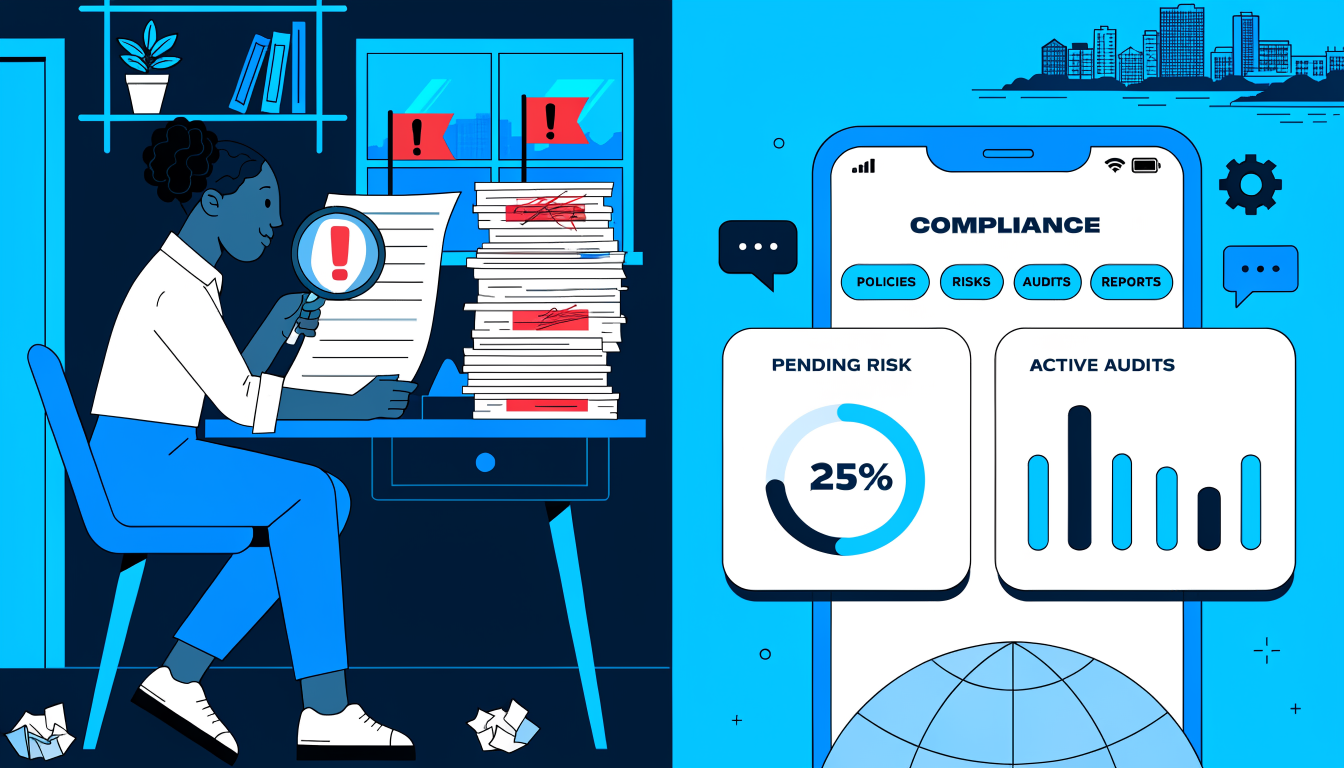
Paper feels safe. It has always been there. You can hold it, file it, and find it (usually). For generations of Bahamian business owners, paper was the only option — and it worked well enough.
But "well enough" is not the same as "compliant." And as regulatory scrutiny of Bahamian businesses has intensified across every sector — financial services, healthcare, legal, insurance, real estate — the gap between paper-based processes and compliance requirements has widened significantly.
Here are five compliance risks that paper-based processes create, why regulators care about them, and what digital systems do differently.
Risk 1: You Cannot Prove When a Document Was Created, Modified, or Accessed
Paper documents have no audit trail. There is no way to prove, with any certainty, when a document was signed, whether it has been altered since then, or who has accessed it. In a dispute — a contract disagreement, a regulatory investigation, an insurance claim — the inability to demonstrate document integrity is a serious vulnerability.
In regulated industries, this matters enormously:
- Financial services businesses are required to maintain records of client instructions and authorisations, with timestamps
- Healthcare providers must demonstrate that patient records have not been altered without authorisation
- Legal firms must show when documents were executed and by whom
- Insurance companies must maintain underwriting records with modification histories
Digital document management systems address this with cryptographic audit trails — every access, every modification, every download is logged automatically with timestamp, user identity, and IP address. The log cannot be altered without detection. Paper cannot do this.
The compliance exposure: In the event of a regulatory audit or legal proceeding, being unable to prove document integrity can result in adverse inferences, penalties, or invalidation of the document itself.
Risk 2: Retention Schedules Are Not Being Met
Every major regulated industry in The Bahamas has document retention requirements. Financial institutions under the Financial Transactions Reporting Act must retain certain records for five to seven years. Healthcare providers must retain patient records for a minimum period determined by their governing body. Legal firms are subject to their professional regulatory requirements. Employment records must be kept for specified periods after an employee's departure.
Paper-based organisations almost universally fail at retention management because:
- Nobody has a clear record of when each document was created
- Retention schedules are not enforced systematically — documents pile up indefinitely or are destroyed too early
- When documents are destroyed, there is no certificate of destruction to prove proper handling
- Physical storage limitations create pressure to destroy documents that should be retained
Digital records management systems automate retention enforcement. Every document is tagged with its creation date, document type, and applicable retention schedule. The system surfaces records approaching their destruction date for review. Destruction is logged. Nothing is retained past its legal date without explicit decision. Nothing is destroyed ahead of schedule without review.
The compliance exposure: Destroying records too early is obstruction. Retaining sensitive records past their legal period is a data protection violation. Both carry penalties. Paper-based systems almost never manage this correctly.
Risk 3: Personal Data Is Not Being Protected Adequately
Filing cabinets containing client financial records, patient files, or employee personal information are subject to the same data protection principles as digital records — they just have far fewer protections in practice. A locked filing room protects against casual access. It does not protect against:
- Staff accessing records they should not see (no access control by role)
- Documents being removed from the office without authorisation (no access logging)
- Records being lost or misplaced (no inventory control)
- Destruction in the event of fire, flooding, or hurricane
- Photocopying or photography of sensitive records with no detection
The Bahamas Data Protection Act creates obligations around how personal data is stored, who can access it, and how breaches must be reported. Paper-based filing systems make it almost impossible to demonstrate compliance with these requirements in the event of an audit or incident.
Digital systems enforce access control at the document level — different users see different documents based on their role. Every access is logged. Sensitive documents can be marked as restricted and require supervisor approval to view. When a breach occurs, the audit log tells you exactly what was accessed, when, and by whom.
The compliance exposure: A data protection breach involving paper records can result in regulatory sanctions and reputational damage. The inability to demonstrate adequate controls compounds the penalty.
Risk 4: You Are Vulnerable to Operational Disruption with No Recovery Path
In any given hurricane season, Bahamian businesses face a real possibility of physical damage to their premises. Paper records destroyed by flooding or wind are gone permanently. There is no recovery path. The business continuity implications can be severe:
- Client agreements and contract terms are lost — disputes arise with no documentation
- Financial records are destroyed — year-end accounting becomes reconstruction from memory and bank statements
- Employee records are gone — payroll history, leave balances, and employment contracts must be rebuilt
- Insurance claim documentation is unavailable — ironically, when you most need your records
Beyond hurricane risk, ordinary operational disruptions — a break-in, a fire, a water leak from an air conditioning unit — can devastate paper-based record systems. The Bahamian climate creates additional risks: humidity accelerates paper degradation, and mould growth in poorly ventilated storage rooms can destroy decades of records within weeks after water exposure.
The compliance exposure: Many regulated industries require business continuity plans that include record recovery procedures. An inability to recover records after a disaster may itself constitute a compliance failure — separate from the operational impact.
Risk 5: You Cannot Respond Quickly to Regulatory Requests
Regulators and auditors request documents. When they do, they typically require a response within a defined timeframe — sometimes 24 to 48 hours for urgent requests. The question is not whether you have the documents. The question is whether you can find them in time.
Consider a Financial Intelligence Unit request for transaction records from three years ago, or a Labour Department inquiry requiring employment contracts for a specific former employee. In a paper-based system, finding these documents may require hours or days of searching through filing cabinets, bankers' boxes, or offsite storage — assuming the documents are correctly filed and undamaged.
Digital systems make this search a matter of seconds. A properly indexed document management system retrieves any document by date, document type, client name, or content keyword instantly. A regulatory request that might take two days to respond to on paper takes ten minutes with digital records.
The compliance exposure: Slow or incomplete responses to regulatory requests raise flags. Regulators interpret them as either poor record-keeping (a compliance failure) or deliberate obstruction (which carries far heavier consequences). Speed of response is a signal of organisational health that regulators notice.
The Common Thread
These five risks share a common root: paper systems have no built-in controls. Every protection that exists in a paper environment depends on human discipline, consistent behaviour, and physical security — all of which fail under stress, staff turnover, and the chaos of day-to-day business operations.
Digital systems build the controls into the architecture. Audit trails are automatic. Retention schedules are enforced by software. Access is governed by role. Backups happen without human intervention. Search is instantaneous. The human element is not eliminated — it is focused on decisions rather than on administrative compliance mechanics.
The transition from paper to digital is not about modernisation for its own sake. For regulated Bahamian businesses, it is increasingly a compliance imperative.
Understand Your Compliance Exposure Before Your Regulator Does
Book a Free Digital Growth Audit with the Novio Group team. We assess your current document and records processes, identify your specific compliance gaps, and give you a practical roadmap for addressing them — before they become regulatory issues.
Book Your Free Digital Growth Audit
Tags
Ready to Transform Your Document & Records Management?
Get a free assessment and see how Docu Island can help your business
Get Free Assessment