
Why Your Bahamian Business Needs a Disaster Recovery Plan (And How to Build One)
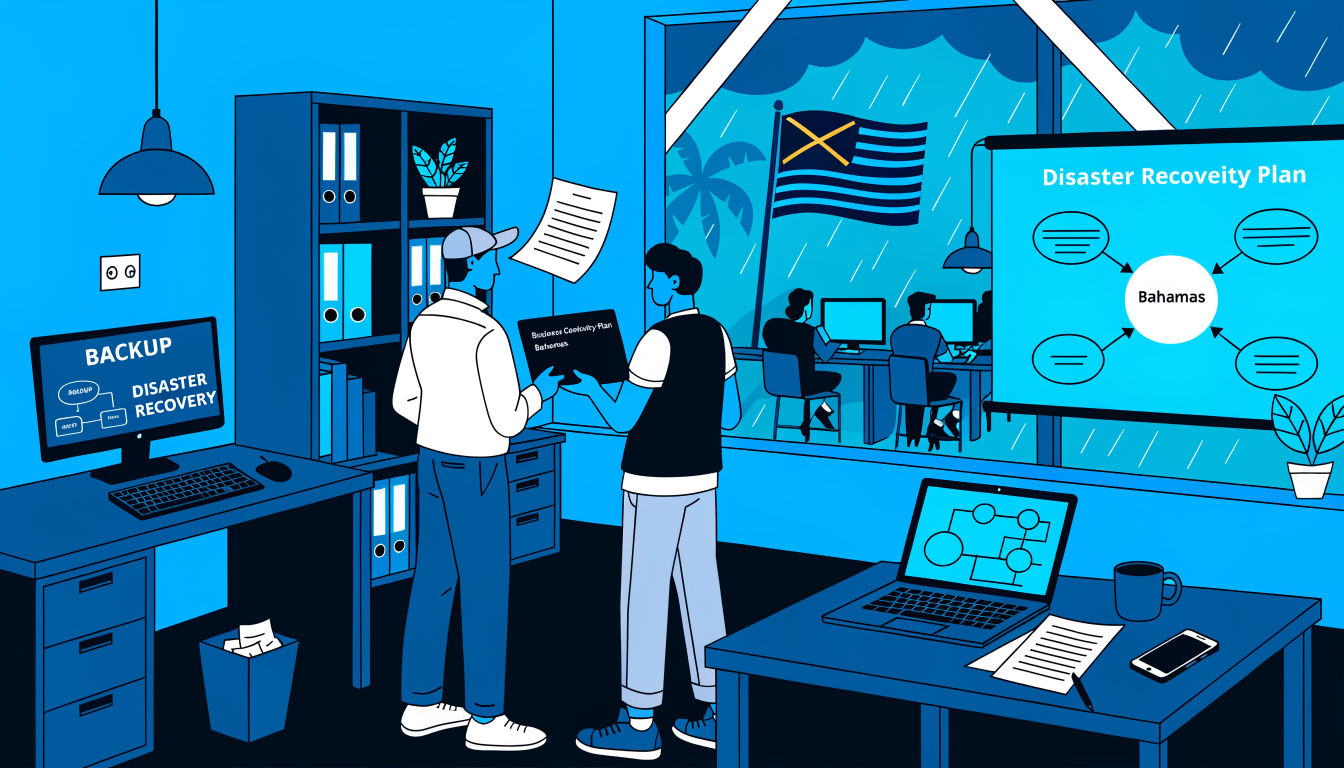
September 1, 2019. Dorian made landfall on Abaco as a Category 5 hurricane with 185mph sustained winds — the strongest Atlantic storm ever recorded at landfall. The destruction was total. And for thousands of businesses on Abaco and Grand Bahama, recovery was measured not in days but in months and years — if it came at all.
Dorian was extreme. But it was not unique. The Atlantic hurricane season runs from June 1 to November 30, and The Bahamas sits in one of the most active hurricane corridors in the world. Businesses that survive storms do not survive them by luck. They survive them because they planned.
This guide walks you through building a disaster recovery plan specific to Bahamian business conditions — one that protects your operations, your data, and your revenue stream when a storm hits.
What a Disaster Recovery Plan Actually Is
A disaster recovery plan (DRP) is a documented set of procedures that tells your business how to respond to a disruptive event — a hurricane, a flood, a fire, or a cyberattack — and how to restore operations as quickly as possible. It is not a hope. It is a plan.
A DRP has two core components:
- Recovery Time Objective (RTO): How long can your business afford to be down? One day? Three days? A week? This defines your urgency level and determines how much redundancy you need to build in.
- Recovery Point Objective (RPO): How much data can you afford to lose? If your systems fail at 3pm, can you restore everything from a backup made that morning? Or yesterday? Or last week?
For most Bahamian businesses, an RTO of 48–72 hours and an RPO of 24 hours is a realistic target. Achieving this requires specific preparation — not just the intention to recover quickly.
Building Your Disaster Recovery Plan: The Essentials
Step 1: Identify Your Critical Systems and Processes
Not everything in your business is equally critical. Start by listing every system and process you depend on, then classify each one:
- Critical (must be restored within 24 hours): Anything that directly generates revenue, handles customer payments, or has contractual obligations attached
- Important (restore within 72 hours): Operational processes that affect service quality but do not immediately stop revenue
- Recoverable (restore within one week): Administrative and back-office functions that can be paused without immediate impact
Step 2: Move Critical Data to the Cloud
On-premises servers and local backups do not survive direct hurricane hits. Cloud storage does. Every critical file, database, customer record, and operational system should have a cloud backup that is geographically separate from your Bahamian premises.
Step 3: Create a Remote Work Capability
If your office is uninhabitable after a storm, your business should still be able to operate from wherever your staff are located — in another part of Nassau, on another island, or from wherever they evacuated to.
Step 4: Document Your Procedures
A disaster recovery plan that exists only in the managing director's head is not a plan. It is a risk. Document how to access each critical system remotely, who is responsible for each recovery step, and step-by-step instructions for restoring each critical system from backup.
Step 5: Test the Plan
Schedule a tabletop exercise once per year — ideally in May, before hurricane season begins — where you walk through a specific scenario: "It is 6am, a Category 3 storm made landfall overnight, the office is inaccessible. What do we do?"
The Cost of Not Planning
The cost of a basic disaster recovery implementation is typically $2,000 to $10,000 depending on business size and starting point. According to FEMA research, 40% of small businesses never reopen after a major disaster. The businesses that survived were the ones that had planned.
Is Your Business Ready for Hurricane Season?
Book a Free Digital Growth Audit with the Novio Group team. We assess your current resilience and give you a clear action plan for closing the gaps before the next storm.
Book Your Free Digital Growth Audit
Tags
Ready to Transform Your Document & Records Management?
Get a free assessment and see how Docu Island can help your business
Get Free Assessment