
Accounting Software for Bahamian Businesses: Stop Running Your Business on Spreadsheets
The Spreadsheet That Is Costing You More Than You Think
If you are running your business finances on a spreadsheet someone built five years ago, you are not alone — but you are paying a price that is hard to see until you try to calculate it.
The spreadsheet approach works until it does not. And in a Bahamian business context — where access to affordable local accounting support is limited, where NIB filings have real deadlines, and where cash flow management during hurricane season can determine whether a business survives — "until it does not" can be a very bad moment.
Modern cloud accounting software has eliminated most of the reasons Bahamian businesses have avoided it. Pricing is accessible. The learning curve is shorter than you think. And the time you get back is real.
What Cloud Accounting Software Actually Does
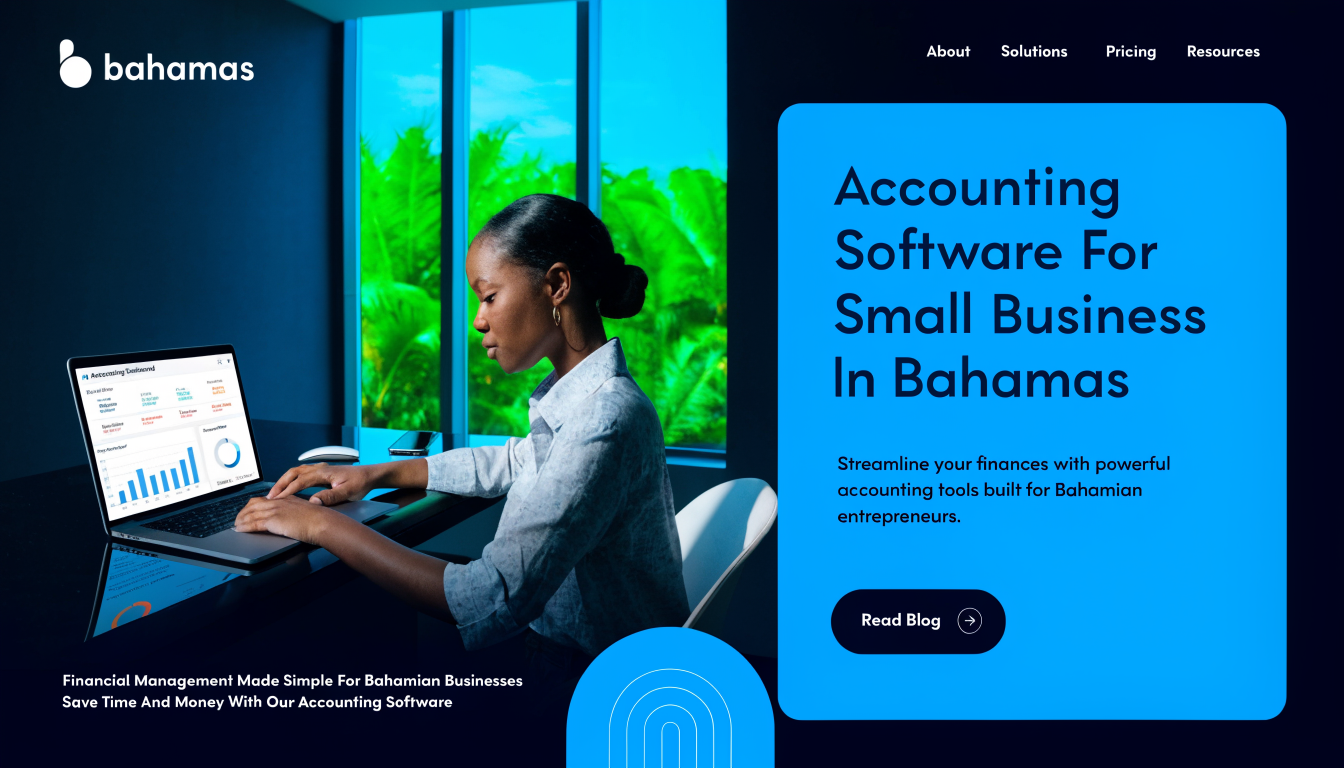
Cloud accounting software does the same things your spreadsheet does — but automatically, accurately, and in real time.
Invoicing and payments. Send professional invoices by email, track which ones are unpaid, send automatic payment reminders, and accept digital payments directly through the invoice. The time saved on invoice follow-up alone is worth the monthly subscription for most service businesses.
Bank reconciliation. Connect your business bank account directly to your accounting software and transactions import automatically. Month-end reconciliation that used to take a day takes an hour.
NIB and payroll. Most platforms handle NIB calculations automatically. Payroll runs correctly, deductions are calculated, and the reports you need for NIB filings are generated without manual calculation.
Financial reporting. Profit and loss, balance sheet, cash flow statement — generated on demand in a few clicks. If you have a bank loan or are seeking financing, these reports are what you need.
The Three Platforms That Work for Bahamian Businesses
QuickBooks Online is the most widely used small business accounting platform globally, and the one most local accountants know. If you work with an external accountant, QuickBooks is likely what they prefer. Plans start around $30 USD/month.
Zoho Books offers powerful accounting at a lower price point. Part of the Zoho suite, it integrates seamlessly if your business already uses Zoho tools. The free plan covers businesses under $50K revenue; paid plans start around $20 USD/month.
Xero is popular with accountants and growing businesses that need multi-user access. Plans start around $15–37 USD/month depending on features.
Making the Switch
The transition from spreadsheets to accounting software takes one to two weeks of focused effort. The typical steps: enter opening balances, connect your bank account and import the last three months of transactions, set up your chart of accounts, create your customer and vendor list, and configure invoicing with your logo, payment terms, and bank details.
Bahamian accountants and bookkeepers typically charge $500–1,500 BSD per month for ongoing bookkeeping. Cloud accounting software runs $20–90 USD per month. Even with professional support, the total cost is lower than manual bookkeeping alone — and the financial visibility you gain is worth more than either. Stop managing your business money in a spreadsheet.
Tags
Ready to Transform Your Document & Records Management?
Get a free assessment and see how Docu Island can help your business
Get Free AssessmentRelated Articles
AI Tools for Bahamian Businesses: What's Actually Useful Right Now
The AI conversation often sounds like science fiction. This post cuts through the hype and focuses on what AI tools are doing practical, revenue-generating work for Bahamian businesses in 2029.
Jul 10, 2029Hurricane Season Business Continuity: The Digital Preparation Checklist for 2029
Hurricane season runs June through November. For Bahamian businesses, digital preparation isn't optional — it's the difference between recovery and closure. Here's the 2029 checklist that actually matters.
Jul 3, 2029Retail Automation for Bahamian Shops: Inventory, POS, and Beyond
Retail automation for Bahamian shops isn't about robots — it's about inventory tracking, POS integration, and reorder triggers that save time and prevent stockouts.
May 29, 2029